Monday, 20 December 2010

Watch the Skies: it's a Total Eclipse of the Moon

Father Frost, the Slavic version of
Santa Claus.
Illustration by Ivan Bilibin
(with thanks to comic creators John Reppion and Leah Moore for the reminder): 21st December 2010 is not only midwinter (also known as DōngZhì, Yule, Şabe Cele/Yalda, Soyal, Şeva Zistanê and many other names) but it’s also the date of a total lunar eclipse.

Because the eclipse occurs on the Solstice means that the Moon will be at the maximum northern position in its orbit. The last time a lunar eclipse occurred on 21st December was in 1991 and the next one is in 2094 - so you may want to try and catch it!

While the effects of a lunar eclipse on people might be in doubt, there is some evidence that it can affect climate. The Altius Directory notes that popular values on the effects of the Moon on weather possibly revisit to when ancient civilizations pursued a lunar calendar, the Moon went from being a simply temporal allusion of becoming an underlying reference.


• More info on the eclipse can be found at www.nasa.gov and www.mreclipse.com (which includes an eclipse time table so you don't miss it and have to wait 84 years for the next one).

Friday, 19 November 2010

Race against time to save Turing papers for the Nation

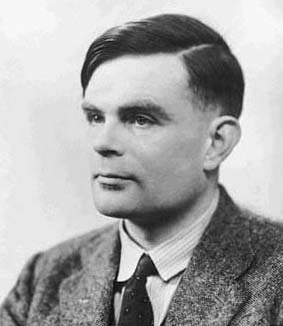
A race against time campaign has been launched by an independent supporter of the Bletchley Park Trust to save what may be the most complete collection of Alan Turing's works in the world.

Alan Mathison Turing was one of the pre-eminent World War Two codebreakers; a mathematician, logician, cryptanalyst and computer scientist who died tragically at the age of just 41, without having received public recognition for his wartime achievements.

Turing.jpgLast year. after the unequivocal apology to wartime code breaker Alan Turing by the British government, prosecuted for his homosexuality in 1952, the Trust urged the nation to support its preservation as a permanent tribute to the legacy of Turing and the thousands who worked there, providing vital intelligence gathering during the Second World War (see news story).


Later this month, Christie's is to auction off an impressive quantity of Turing's offprints, as part of a larger auction of manuscripts, including 15 of his 18 published papers. It is thought to be the largest collection in the world, put together by Turing's friend and fellow Bletchley Park codebreaker, Professor Max Newman, to whom Turing presented the offprints.

The collection includes Turing's first published paper  'Equivalence of left and right almost periodicity' an offprint from: Journal of the London Mathematical Society in 1935 and  'Computing machinery and intelligence', a pioneering piece on artificial intelligence, an offprint from: MIND: A quarterly review of Psychology and Philosophy, published in 1950, along with the only published evidence of Turing's war work on computers.

Gareth Halfacree, an independent supporter of the Bletchley Park Trust, has launched a campaign to raise the money needed to purchase the collection for permanent public display at Bletchley Park.

"They belong in a dedicated museum," he says, "but Bletchley Park can't afford the £300,000 to £500,000 guide price.

"As a result, I'm asking for volunteers to dig deep and see to it that these papers not only stay in this country but stay where the public can see them and benefit from them. Let's save them from being locked away in the vaults of a private collector."

William Newman, the son of Max Newman, highlighted the importance of the collection, saying, "The offprint collection's value derives mainly from its completeness; indeed it may be the most complete collection of Turing's works in the world. This has come about because Turing started to give offprints to Max Newman before he had published the Computable Numbers paper. He subsequently gained a large following, who were interested mainly
in his follow-on work. In fact Turing published only 18 papers."

However, time is short to save these highly valuable papers for the nation. The auction takes place on the 23 November.

To view the collection visit the Christies web site or to donate please visit, www.justgiving.com/turing-papers/


• For visitor information, contact 01908 640404, info@bletchleypark.org.uk,or go to www.bletchleypark.org.uk

Dan Dare inspired a lifetime of science for Professor Pillinger

Dan Dare fans inspired by his adventures might well be interested in Professor Colin Pillinger's new book, My Life on Mars.

Colin gained his PhD from the University of Swansea, Wales, in the late 1960s , and became one of the lucky few Britons to work on the lunar samples brought back by the Apollo 11 Moon landing mission. Later, at Cambridge and the Open University, he developed techniques for classifying meteorites according to their chemical composition, and has worked on a NASA mission to collect a sample of the 'solar wind', and ESA missions to investigate how meteorites erode in space.

He's perhaps best known for his work on the European Mars Express project and the the Mars Lander, Beagle 2 and his experiences surrounding its development are a major part of the new book.

Journey in to Space -
like Dan Dare, an
inspiration
Born in 1943 and growing up in the 1950s, it should come as no surprize to learn that Professor Pillinger was inspired by reading Dan Dare in the Eagle and the BBC's  Journey into Space radio adventure serial as a child. 

"Like many kids, I used to read Dan Dare comics and listen to Journey into Space on the radio," he revealed in an interview for the European Space Agency web site. "And I would draw rockets, which, of course, bore no resemblance to how they are now. It was a big surprise when I first saw that spacecraft didn’t have a point at the top and fins at the bottom!

"But I was not an anorak," he insisted in another interview for the Daily Telegraph. "When I went to class, it was to sit in the back row. School was a place to meet other kids and play football. I didn't want to be the next Einstein."

"My Life on Mars is a dual autobiography," Professor Pillinger says of the book. "Mine interwoven with the untold story (including the bits some people didn't want anybody to know) of Beagle 2. For seven years the British mission to look for life on the Red Planet captivated the public all over the World."

Stories about about the mission appeared in the media all over the World, particularly in the United States as the following extract from the book’s dust jacket reveals:
On 12 March 2010 Astronauts Neil Armstrong, the first man to set foot on the Moon, Gene Cernan, the last man to do so and Jim Lovell, who piloted the stricken Apollo 13 home, broke a journey back to the United States to attend an event at the Royal Society designed to encourage an audience of young people to follow careers in science and technology. Among the Fellows of the Society present was Colin Pillinger.

As Colin got up to leave at the end of the afternoon, he was grabbed by a US Embassy official who said “The Astronauts would like to meet you.” Of course Colin wanted to meet them but he wasn’t prepared for the greeting he received from Neil Armstrong, perhaps the best known man on Earth, “You analysed some of my samples!” Being recognised by such a trio must make Colin, a man with a passion for telling the public about science, one of the best known scientists in Britain.

Colin owed Armstrong et al. a great deal. He had come from what can only be described as an under-privileged background, via the Apollo programme to lead the ill-fated Beagle 2 mission to Mars. In 1996 he gathered around him an unlikely team consisting of the Rock Band, Blur, the country’s most controversial artist Damien Hirst, combined them with top University scientists and engineers from the satellite Industry, designed a spacecraft on the back of a beer mat, built it in a garage and set off 250 million miles to answer one of life’s ultimate questions: “Are we alone in the Universe?” Colin’s wife, Judith, named the spacecraft Beagle 2; it had the British Nation on the edge of its seat at Christmas 2003.
This then is Colin Pillinger’s story and the full, previously undisclosed, account of the Beagle 2 mission.
Published by the British Interplanetary Society, this 369 page book features over 100 illustartions and a foreword by Sir Patrick Moore. It  costs £16.50 (plus £2.50 P&P in UK, overseas please enquire) when purchased from British Interplanetary Society’s website at www.bis-spaceflight.com and is also available from all good bookshops (ISBN 978-0-9506597-3-2).


• For signed and dedicated copies contact the author at www.barnstormpr.co.uk


More famous Dan Dare fans listed here on our main site


Inside Out - 2004 BBC interview with Professor Pillinger 


The Guardian, 16th January 2009: Britain needs a real-life Dan Dare to inspire the young

Friday, 12 November 2010

Is the iPad on Christmas Lists? No, say Consumers

The latest research from Broadbandgenie.co.uk has shown that most UK consumers won't dream of paying £400 for an Apple iPad, despite the desirability of the UK's number one new gadget.

This will also be bad news for Samsung, whose Galaxy tablet is being released with similar price points in the run up to Christmas, available from Tesco, Carphone Warehouse and electrical stores, as well as all the major mobile telecoms.

The Samsung Galaxy Tablet. More info for UK buyers here
In a poll of more than 1,300 visitors to the broadband, mobile broadband and smartphone comparison site, more than 60 per cent said the iPad was 'definitely not' worth £400 or more. More than 200 more said it 'wasn't really' worth the price tag, putting the total thinking it was poor value up to 80 per cent.

The 32GB iPad, with its 24.5cm (9.7in) touchscreen, looks like an enlarged iPhone and costs £499 (and £599 for the WifFi/3G model), while the 64GB version costs £599 (£699 with Wifi/3G).

"There's a clear message here from British consumers," notes Broadband Genie editor Chris Marling. "While they like the idea of a tablet, they aren't willing to pay through the nose for one.

"With ereaders, smartphones, netbooks and even laptops now available for a fraction of that price, it's a tough ask for people to see the value in a tablet costing up to £700. And with cheaper tablet models already appearing, some running on the popular Android OS, it's easy to see why.

"Over time, the tablet is likely become a standard gadget in the majority of UK households," he feels. "Essentially right now they bring nothing new to the party, so are very much a luxury - especially in this price bracket.

"We see two likely scenarios," he offers. "Firstly, potential customers will wait to see how much mobile networks are willing to subsidise these top end tablets via 3G SIM contracts. Secondly, they will balance this against the quality of the cheaper models that are now arriving and make a decision accordingly.

"British consumers are a wily bunch, especially when it comes to mobile broadband devices," feels Marling. "On the whole, they simply won't pay ludicrous prices for this kind of technology, even if it does come branded with the Apple logo."

• IPad on Apple UK: www.apple.com/uk/ipad

Samsung Galaxy Tab: UK Information from Samsung

Tuesday, 19 October 2010

Uk.Com talent to create the Facebooks of the Future

The next generation of websites destined to succeed Google, Facebook and Twitter will be made in Britain - at least, that's the hope of the people behind the just-announced UK.COM Awards, a new initiative to encourage and support British entrepreneurs and creative talents to launch new ventures on the internet.

The UK.COM Awards from UK.COM aim to recognise original ideas and excellent design, content and functionality in British websites.

Winners in four categories will be selected by a jury of experts, and both the website owner and the website designer will be recognised. The overall winner will be awarded a cash prize of £5,000. Nominations close on the 31st December 2010, with judging and prize giving to be held in the new year.

The UK.COM Awards are a philanthropic extension of UK.COM's existing service - providing desirable domain names ending with ".uk.com" to British organisations ranging from Pineapple Dance Studios (pineapple.uk.com) to Avon (avon.uk.com) to thousands of creative projects and successful business start-ups.

"The first step in making your idea for a website or business a reality is securing the domain name that you really want. In the UK that means a name ending .UK.COM, which combines a British identity with the dot-com ending that attracts 90% of all web traffic," said Ben Crawford, CEO of UK.COM parent company, CentralNic.

The competition is open to all existing and planned websites using a .UK.COM domain. British website owners and designers can nominate their own websites, or sites they designed. Members of the public can nominate sites they appreciate. There is no fee for nominees, and nominators may submit more than one website.

• To start nominating, go to WWW.UK.COM and fill out the simple form. It takes less than a minute. For those who have not yet realized their online vision, they can simply explain their idea in the space provided.

Wednesday, 25 August 2010

What's eating the Gulf Spill oil?

Holman-oil-eaters
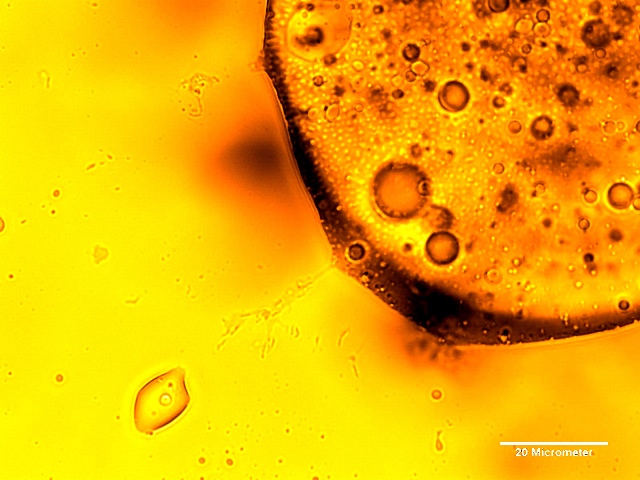
Microbes are degrading oil in the deepwater plume from the BP oil spill in the Gulf, a study by Berkeley Lab researchers has shown. Image: Hoi-Ying Holman group
After BP’s Deepwater Horizon drilling rig exploded in the Gulf of Mexico earlier this year, a dispersed oil plume was formed at a depth between 3,600 and 4,000 feet, extending some 10 miles out from the wellhead.

Now, an intensive study by scientists with the Lawrence Berkeley National Laboratory (and indirectly funded by BP) has found that microbial activity, spearheaded by a new and unclassified species, degrades oil much faster than anticipated. This degradation appears to take place without a significant level of oxygen depletion.

This would appear to suggest that, although oxygen has been depleted in the oil spill area, the feared “dead-zones” in the water column it might lead to have not yet occurred.

“Our findings show that the influx of oil profoundly altered the microbial community by significantly stimulating deep-sea psychrophilic (cold temperature) gamma-proteobacteria that are closely related to known petroleum-degrading microbes,” says Terry Hazen, a microbial ecologist with Berkeley Lab’s Earth Sciences Division and principal investigator with the Energy Biosciences Institute, who led this study.

“This enrichment of psychrophilic petroleum degraders with their rapid oil biodegradation rates appears to be one of the major mechanisms behind the rapid decline of the deepwater dispersed oil plume that has been observed.”

The uncontrolled oil blowout in the Gulf of Mexico from BP’s deepwater well was the deepest and one of the largest oil leaks in history. The extreme depths in the water column and the magnitude of this event posed a great many questions. In addition, to prevent large amounts of the highly flammable Gulf light crude from reaching the surface, BP deployed an unprecedented quantity of the commercial oil dispersant Corexit 9500 at the wellhead, creating a plume of micron-sized petroleum particles.

Although the environmental effects of Corexit, a product created by Illinois-based company Nalco, have been studied in surface water applications for more than a decade, its potential impact and effectiveness in the deep waters of the Gulf marine ecosystem were unknown.

Over five million liters of dispersants have  been used to break up the Gulf oil spill and Corexit is the most-used dispersant, with COREXIT 9527 having been replaced by COREXIT 9500 after the former was deemed too toxic. Oil that would normally rise to the surface of the water is broken up by the dispersant into small globules that can then remain suspended in the water.

Analysis by Hazen and his colleagues of microbial genes in the dispersed oil plume revealed a variety of hydrocarbon-degraders, some of which were strongly correlated with the concentration changes of various oil contaminants. Analysis of changes in the oil composition as the plume extended from the wellhead pointed to faster than expected biodegradation rates with the half-life of alkanes ranging from 1.2 to 6.1 days.

“Our findings, which provide the first data ever of microbial activity from a deepwater dispersed oil plume, suggest that a great potential for intrinsic bioremediation of oil plumes exists in the deep-sea,” Hazen says.

“These findings also show that psychrophilic oil-degrading microbial populations and their associated microbial communities play a significant role in controlling the ultimate fates and consequences of deep-sea oil plumes in the Gulf of Mexico.”

The results of this research were reported in the journal Science (26th August 2010 on-line) in a paper titled “Deep-sea oil plume enriches Indigenous oil-degrading bacteria.” Hazen and his colleagues began their study on 25th May. At that time, the deep reaches of the Gulf of Mexico were a relatively unexplored microbial habitat, where temperatures hover around 5 degrees Celsius, the pressure is enormous, and there is normally little carbon present.

“We deployed on two ships to determine the physical, chemical and microbiological properties of the deepwater oil plume,” Hazen says. “The oil escaping from the damaged wellhead represented an enormous carbon input to the water column ecosystem and while we suspected that hydrocarbon components in the oil could potentially serve as a carbon substrate for deep-sea microbes, scientific data was needed for informed decisions.”
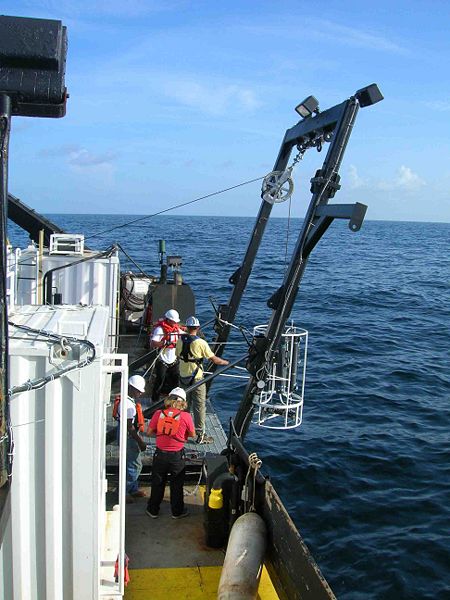
Sample-gathering.jpg
Berkeley Lab researchers
collected more than 200 samples
from 17 deepwater sites around
the damaged BP wellhead in
the Gulf of Mexico between
May 25 and June 2, 2010.
Image: Terry Hazen group
Hazen, who has studied numerous oil-spill sites in the past, is the leader of the Ecology Department and Center for Environmental Biotechnology at Berkeley Lab’s Earth Sciences Division. He conducted this research under an existing grant he holds with the Energy Biosciences Institute to study microbial enhanced hydrocarbon recovery.

EBI is a partnership led by the University of California Berkeley and including Berkeley Lab and the University of Illinois that is funded by a $500 million, 10-year grant from BP.

Results in the Science paper are based on the analysis of more than 200 samples collected from 17 deepwater sites between 25th May and 2nd June 2010. Sample analysis was boosted by the use of the latest edition of the award-winning Berkeley Lab PhyloChip – a unique credit card-sized DNA-based microarray that can be used to quickly, accurately and comprehensively detect the presence of up to 50,000 different species of bacteria and archaea in a single sample from any environmental source, without the need of culturing.
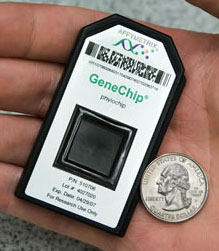
PhyloChip.jpg
The latest version of the
Phylochip designed in conjunction
with Lawrence Berkeley Lab
Originally developed for the federal BioWatch program to warn of a release of dangerous airborne microorganisms by terrorists, LBNL researchers have previously used this technology to discover that there is a surprisingly larger diversity of bacteria found in the air.

Use of the Phylochip enabled Hazen and his colleagues to determine that the dominant microbe in the oil plume is a new species, closely related to members of Oceanospirillales family, particularly Oleispirea antarctica and Oceaniserpentilla haliotis.

Hazen and his colleagues attribute the faster than expected rates of oil biodegradation at the 5 degrees Celsius temperature in part to the nature of Gulf light crude, which contains a large volatile component that is more biodegradable.

The use of the Corexit dispersant may have also accelerated biodegradation because of the small size of the oil particles and the low overall concentrations of oil in the plume. In addition, frequent episodic oil leaks from natural seeps in the Gulf seabed may have led to adaptations over long periods of time by the deep-sea microbial community that speed up hydrocarbon degradation rates.

One of the concerns raised about microbial degradation of the oil in a deepwater plume is that the microbes would also be consuming large portions of oxygen in the plume, creating so-called “dead-zones” in the water column where life cannot be sustained. In their study, the Berkeley Lab researchers found that oxygen saturation outside the plume was 67 per cent while within the plume it was 59 per cent.

“The low concentrations of iron in seawater may have prevented oxygen concentrations dropping more precipitously from biodegradation demand on the petroleum, since many hydrocarbon-degrading enzymes have iron as a component,” Hazen says. “There’s not enough iron to form more of these enzymes, which would degrade the carbon faster but also consume more oxygen.”

Despite this apparently good news, the concerns about the massive use of dispersants remains. An article in Scientific American published in June notes that both types of the dispersal compound Corexit used in the Gulf are capable of killing or depressing the growth of a wide range of aquatic species, ranging from phytoplankton to fish. "It's a trade-off decision to lessen the overall environmental impact," explained marine biologist Jane Lubchenco, director of the National Oceanic and Atmospheric Administration, at a press conference on 12th May. "When an oil spill occurs, there are no good outcomes."

An article in the Christian Science Monitor notes that the US Environmental Protection Agency lists 12 other types of dispersants as being more effective in dealing with oil in a way that is safe for wildlife. One of those tested was Dispersit, which an item in Wired says is 100% effective in dispersing Gulf oil and is less toxic to silverfish and shrimp Corexit.

• Visit the Berkeley Lab website at http://www.lbl.gov


• Nalco has more information about the use of Corexit products in the Gulf oil spill here.

Scientific American, 18th June 2010: Is Using Dispersants on the BP Gulf Oil Spill Fighting Pollution with Pollution?

Tuesday, 20 July 2010

Cool Roofs May help ease Global Warming

Can light-coloured rooftops and roads really curb carbon emissions and combat global climate change?

The idea has been around for years, but now, a new study by researchers at Lawrence Berkeley National Laboratory that is the first to use a global model to study the question has found that implementing cool roofs and cool pavements in cities around the world can not only help cities stay cooler -- they can also cool the world. Potentially, this could cancel the heating effect of up to two years of worldwide carbon dioxide emissions.

It's long been known that because white roofs reflect far more of the sun’s heat than black ones, buildings with white roofs will stay cooler. If the building is air conditioned, less air conditioning will be required, thus saving energy.

Even if there is no air conditioning, the heat absorbed by a black roof both heats the space below, making the space less comfortable, and is also carried into the city air by wind—raising the ambient temperature in what is known as the urban heat island effect. (Eevn a non science person, it doesn't take being a genius to know how much hotter cities can be in the summer compared with the surrounding countryside, or even a park within that city).

There’s also a third, less familiar way in which a black roof heats the world: it radiates energy directly into the atmosphere, which is then absorbed by the nearest clouds and ends up trapped by the greenhouse effect, contributing to global warming.

This week, the US Energy Secretary Steven Chu announced a series of initiatives at the Department of Energy to more broadly implement cool roof technologies on DOE facilities and buildings across the federal government. As part of the effort to make the federal government more energy efficient, Chu has directed all DOE offices to install cool roofs, whenever cost effective over the lifetime of the roof, when constructing new roofs or replacing old ones at DOE facilities.

The Secretary  also issued a letter to the heads of other federal agencies encouraging them to take similar steps at their facilities.

“Cool roofs are one of the quickest and lowest cost ways we can reduce our global carbon emissions and begin the hard work of slowing climate change,” said Chu. “By demonstrating the benefits of cool roofs on our facilities, the federal government can lead the nation toward more sustainable building practices, while reducing the federal carbon footprint and saving money for taxpayers.”

In the latest study, the Berkeley Lab researchers and their collaborators used a detailed global land surface model from NASA Goddard Space Flight Center, which contained regional information on surface variables, such as topography, evaporation, radiation and temperature, as well as on cloud cover. For the northern hemisphere summer, they found that increasing the reflectivity of roof and pavement materials in cities with a population greater than 1 million would achieve a one-time offset of 57 gigatons (1gigaton equals 1 billion metric tons) of CO2 emissions (31 Gt from roofs and 26 Gt from pavements). That’s double the worldwide CO2 emissions in 2006 of 28 gigatons.

Their results were published online in the journal Environmental Research Letters.

“These offsets help delay warming that would otherwise take place if actual CO2 emissions are not reduced,” says Surabi Menon, staff scientist at Berkeley Lab and lead author of the paper.

Cool roofs and pavements are only a part of the solution to global warming, of course.

“Two years worth of emissions is huge, but compared to what we need to do, it’s just a dent in the problem,” emphasizes the report's co-author Hashem Akbari, the former head of the Berkeley Lab Heat Island Group and now Hydro-Quebec Industrial Research Professor at Concordia University in Montreal. “We’ve been dumping CO2 into the atmosphere for the last 200 years as if there’s no future.”

This study is a follow-up to a 2008 paper published in the journal Climate Change, which calculated the CO2 offset from cool surfaces by using a simplified model that assumed a global average for cloud cover. The earlier paper, co-authored by Akbari, Menon and Art Rosenfeld, a Berkeley Lab physicist who was then a member of the California Energy Commission, found that implementing cool roofs and pavements worldwide could offset 44 gigatons of CO2 (24 Gt from roofs and 20 Gt from pavements).


“If all eligible urban flat roofs in the tropics and temperate regions were gradually converted to white (and sloped roofs to cool colors), they would offset the heating effect of the emission of roughly 24 Gt of CO2, but one-time only,” says Rosenfeld, who returned to Berkeley Lab this year. “However, if we assume that roofs have a service life of 20 years, we can think of an equivalent annual rate of 1.2 Gt per year.

"That offsets the emissions of roughly 300 million cars (about the cars in the world) for 20 years!”

In both studies, the researchers used a conservative assumption of increasing the average albedo (solar reflectance) of all roofs by 0.25 and of pavements by 0.15. That means a black roof (which has an albedo of 0) would not have to be replaced by a pure white roof (which has an albedo of 1), but just a roof of a cooler color, a scenario that is more plausible to implement.

Roofs and pavements cover 50 to 65 per cent of urban areas. Because they absorb so much heat, dark-colored roofs and roadways create what is called the urban heat island effect, where a city is significantly warmer than its surrounding rural areas. This additional heat also eventually contributes to global warming. More than half of the world’s population now lives in cities; by 2040 the proportion of urbanites is expected to reach 70 percent, adding urgency to the urban heat island problem.

The Berkeley Lab study found that global land surface temperature decreased by a modest amount -- an average of roughly 0.01degrees Celsius, based on an albedo increase of .003 averaged over all global land surfaces. This relatively small temperature reduction is an indication that implementing cool surfaces can be only part of the solution to the global climate change problem, the researchers say. To put the number in context, consider that global temperatures are estimated to increase about 3 degrees Celsius in the next 40 to 60 years if CO2 emissions continue rising as they have. Preventing that warming would necessitate a 0.05 degree Celsius annual decrease in temperature between now and 2070.

The findings from this  research suggest even modest changes should not be dismissed.

“Simply put, a cool roof will save money for homeowners and businesses through reduced air conditioning costs. The real question is not whether we should move toward cool roof technology: it's why we haven't done it sooner,” says Rosenfeld.

Other research into 'cool roofs' has reached similar conclusions. Another recent study on cool roofs, led by Keith Oleson at the National Center for Atmospheric Research (NCAR) and published in Geophysical Research Letters, found that if every roof were painted entirely white, the CO2 emission offsets would be approximately 32 Gt for summer and about 30 Gt annually. While the NCAR study used a different model, the calculated CO2 emission offsets are similar to the results from the Berkeley Lab study and provide a useful and independent verification of the expected CO2 emission offsets from increasing the reflectivity of roofs.

Some observers have pointed out that cool roofs do not make sense in cooler climates because of “winter penalties,” since cooler buildings require more energy to heat. However, the energy savings from cooler buildings usually outweighs any increase in heating costs. Furthermore, in winter, there tends to be more cloud cover; also, the sun is lower and the days are shorter, so a flat roof’s exposure to the sun is significantly reduced.

“Cool roofs have worked for thousands of years in the Mediterranean and Middle Eastern cities, where demand for air conditioning is low,” says Akbari. “If you have a cool roof on your house, that will reduce your energy use from air conditioning and it’s a gift that keeps on giving for many, many years, for the life of the roof.”

• Berkeley Lab website: www.lbl.gov

US Department of Energy Cool Roofs annnouncement

• Read the 2010 paper by Surabi Menon, Hashem Akbari, Sarith Mahanama, Igor Sednev and Ronnen Levinson,
“Radiative forcing and temperature response to changes in urban albedos and associated CO2 offsets”

Tuesday, 27 April 2010

IBM Micro 'Map' marks new stage for Nanotech

IBM Nano Map


In a breakthrough for nanotechnology, which could mean fast prototyping of nano-sized devices for future computer chips, IBM scientists have developed new, 'low cost' a nono-technique that they've demonstrated by creating a 3D map of the earth so small that 1,000 of them could fit on one grain of salt.

The scientists accomplished this impressive nano-feat through a new, breakthrough technique that uses a tiny, silicon tip with a sharp apex — 100,000 times smaller than a sharpened pencil — to create patterns and structures as small as 15 nanometers at greatly reduced cost and complexity. This patterning technique opens new prospects for developing nanosized objects in fields such as electronics, future chip technology, medicine, life sciences, and optoelectronics.

To demonstrate the technique's unique capability, the team created several 3D and 2D patterns, using different materials for each one as reported in the scientific journals Science and Advanced Materials, including a 25-nanometer-high 3D replica of the Matterhorn, the famous Alpine mountain that soars 4,478 m (14,692 ft) high. The nano-replica was created in molecular glass, representing a scale of 1:5 billion.

The complete 3D map of the world measures only 22 by 11 micrometers was "written" on a polymer. At this size, 1,000 world maps could fit on a grain of salt. In the relief, one thousand meters of altitude correspond to roughly eight nanometers (nm). It is composed of 500,000 pixels, each measuring 20 nm2, and was created in only 2 minutes and 23 seconds.

The core component of the new technique, which was developed by a team of IBM scientists, is a tiny, very sharp silicon tip measuring 500 nanometers in length and only a few nanometers at its apex.

"Advances in nanotechnology are intimately linked to the existence of high-quality methods and tools for producing nanoscale patterns and objects on surfaces," explains physicist Dr. Armin Knoll of IBM Research – Zurich. "With its broad functionality and unique 3D patterning capability, this nanotip-based patterning methodology is a powerful tool for generating very small structures."

The tip, similar to the kind used in atomic force microscopes, is attached to a bendable cantilever that controllably scans the surface of the substrate material with the accuracy of one nanometer—a millionth of a millimeter. By applying heat and force, the nano-sized tip can remove substrate material based on predefined patterns, thus operating like a "nanomilling" machine with ultra-high precision.

Similar to using a milling machine, more material can be removed to create complex 3D structures with nanometer precision by modulating the force or by readdressing individual spots. To create the 3D replica of the Matterhorn, for example, 120 individual layers of material were successively removed from the molecular glass substrate.

The new IBM technique achieves resolutions as high as 15 nanometers—with a potential of going even smaller. Using existing methods such as e-beam lithography, it is becoming increasingly challenging to fabricate patterns at resolutions below 30 nanometers, where the technical limitations of that method are reached.

You can find out more about how it works it in this video, below.


Compared to expensive e-beam-lithography tools that require several processing steps and equipment that can easily fill a laboratory, the new tool created by IBM scientists—which can sit on a tabletop—promises improved and extended capabilities at very high resolutions, but at one-fifth to one tenth of the cost and with far less complexity.

Yet another advantage of the nanotip-based technique is the ability to assess the pattern directly by using the same tip to create an image of the written structures, as the IBM scientists demonstrated in their experiments.

Potential applications range from the fast prototyping of nano-sized devices for future computer chips to the production of well defined micron-sized optical elements like aspheric lenses and lens-arrays for optoelectronics and on-chip optical communication.

IBM has been a pioneer in nanoscience and nanotechnology ever since the development of the scanning tunneling microscope (STM) in 1981 by IBM Fellows Gerd Binnig and Heinrich Rohrer. For this invention, which made it possible to image individual atoms and later on to manipulate them, Binnig and Rohrer were awarded the Nobel Prize in Physics in 1986. The atomic force microscope, an offspring of the STM, was invented by Binnig in 1986. The STM is widely regarded as the instrument that opened the door to the nanoworld.

In fact, it was 20 years ago this month that IBM Fellow Don Eigler reported the first controlled movement of individual atoms, famously using a scanning tunneling microscope to spell out the letters "I B M" with 35 xenon atoms.

These historic breakthroughs laid a solid foundation for IBM's continued research in nanoscience.

Contributing to this rich history for years to come, a new world-class collaborative nanoscale research lab is currently under construction on the campus of IBM Research – Zurich. This state-of-the-art nanotech center, which will open next year, is part of a strategic partnership in nanotechnology between IBM Research and ETH Zurich, one of Europe's leading technical universities.

• More info: http://asmarterplanet.com


Saturday, 23 January 2010

Samsung Unveils Galaxy Portal android phone

Samsung i7500 Galaxy PortalSamsung officially announced its newest Android powered smartphone for the UK – the ‘Galaxy Portal’, i5700 (named ‘Galaxy Spica’ outside the UK) this week.

The latest Android device from Samsung is on sale now, and will be available exclusively on the T-Mobile network for the first month, with the black variant available exclusively on T-Mobile for the first three months.

Samsung Galaxy Portal is a powerful Android-powered smartphone that offers seamless connectivity, with smooth access to Google mobile services and easy connection to popular social network sites such as Facebook and MySpace.

Galaxy Portal will launch with embedded content using Layar, the augmented reality browser which lets people access detailed visual guides to what’s around them by pointing their handset at their surroundings. For example, The Samsung Football Pub Finder shows users which nearby pubs are showing that all important football match, simply by pointing the phone at them.

The Android Operating System means people can customise the content on their Galaxy Portal so they build a handset to suit their needs. The Galaxy Portal acts as a blank canvas, so you can choose the content, applications and widgets that you want and make them available at a touch of a button. Android also lets you run several applications at once so it’s perfect for multitasking.

Designed, for those who want everything, the Samsung Galaxy Portal comes equipped with DNSe 2.0 for better sound quality and 3.5 mm ear jack, the Galaxy Portal offers is perfect for listening to music and playing videos.

The phone, which boasts a 3.2” TFT screen and stylish, compact design, at just 13.2 mm thick, also has a long battery life (1500mAh), which should mean people won’t have to worry about their phone running out of juice while on the move and can enjoy the applications and multimedia content without having to constantly recharge.

“The launch of this stunning device clearly underlines our commitment to smartphone products and forms part of our strategy to deliver a wide range of handsets designed to suit a multitude of users,” said Mark Mitchinson, Vice President Samsung Mobile UK & Ireland.

“The Samsung Galaxy Portal gives consumers the benefits of the Android platform – including an extensive range of innovative apps to download, multi-tasking with apps running in parallel and pre-installed Google services – at an affordable price”.

“We were the first network to introduce an Android mobile to the UK back in October 2008," added Nicola Shenton, Head of Handset and Device Marketing, T-Mobile UK, "and since then Android-based handsets have been a huge hit with our customers. The addition of the Samsung Galaxy Portal to our Android range means we can now offer all the benefits of Android technology for just £20 a month on a pay monthly contract.”

• The Samsung Galaxy Portal supports the full suite of Google services, including Google Search, Google Maps, Gmail, YouTube, and Google Talk, meaning users enjoy the familiar desktop computer experience while on the move.


• The Samsung Galaxy Portal (i5700) is available in the UK on T-Mobile exclusively for one month from Monday 12th January 2010. T-Mobile will be stocking the black Galaxy Portal exclusively for 3 months. More info: www.t-mobile.co.uk

Samsung I5700 Product Fact Sheet

Network HSDPA 3.6Mbps (900/2100Mhz)
EDGE/GPRS (850/900/1800/1900Mhz)
OS Android (ver. Android 1.5)
Display 3.2” HVGA(320x480) TFT
Camera 3.2MP Camera (Auto Focus)
Video / Audio Video: MPEG4, H.263, H.264, WMV,DivX
Audio: MP3, AAC, AAC+, eAAC+, WMA
Value Added
Features Full Web Browser, Google Search, Google Maps, Gmail,
YouTube, Google Talk, Android Market, 3.5mm Ear jack, GPS
Connectivity Bluetooth® 2.1, USB 2.0, MicroUSB, WiFi
Memory Internal memory: 180MB
External memory: Micro SD (Up to 32GB)
1GB Micro SD supplied with handset
Battery 1500 mAh
Size 115 x 57 x 13.2mm

Android, Google, Android Market, Google Search, Google Maps, Gmail, YouTube, Google Talk are trademarks of Google Inc.

islate? ipad? Has Anyone Got An iota?

apple_tablet_rendition-100121.jpg


Above: a mock up of what Apple's "iSlate" might look like, as conceived by Fotoboer.nl, modelled in 3dsmax from scratch

Apple will introduce their new creation this week (Wednesday 27 January) to great fanfares in San Francisco – but does anyone know what it will be called?

What is known is that Apple plan to unveil their new media tablet, but such is the secrecy no one appears sure as to what it will be called! Reports suggest the new invention will be called ‘iSlate’ however fresh rumours emerged today that bosses were thinking of making a last minute name change in an effort to differentiate the new tablet from Microsoft’s new Slate PC.

The rumours have left everyone guessing and Paddy Power betting as to what jazzy name will be unveiled to them next week.

The odds on Apple sticking with iSlate are 4/5 with while it’s 7/4 they switch to iPad, 6/1 they opt for the name iTablet, 8/1 for iPage and 25/1 they completely change the name to iCon. There are even 500/1 odds available that bosses will go for Etch-a-Sketch after the popular 1970s toy the new gadget is said to resemble.

Paddy Power said: “Everybody is eagerly anticipating Apple’s new creation – and while there seems to be a question mark over its name it could also be a clever ploy by Apple to get people talking ahead of next week.”

What will Apple's New Product be called?

4/5 iSlate
7/4 iPad
6/1 Tablet
8/1 iPage
9/1 iPaper
12/1 iRead
16/1 iProd
20/1 iCan
20/1 iBoard
25/1 iCon
33/1 Magic Slate
50/1 The Apple Core
100/1 The Googlebuster
100/1 The Microsoftener
100/1 The Apple Peeler
200/1 iCan't believe it's not a paper
500/1 Etch-a-Sketch

A prominent investment baking firm said this week that the new device may sell an estimated five million units in its first year as a "base case" scenario, and Apple's tablet would earn the company $2.8 billion in additional revenue and solidify it as more than a niche product.

• For a comprehensive archive of all rumors surrounding Apple's tablet device, check out the AppleInsider website's Newton and tablet topics pages, or review its exclusive reports on the product (below) dating back to the fall of 2007. Also of potential interest may be a recent feature article: The inside track on Apple's tablet: a history of tablet computing.

Friday, 15 January 2010

The Time Traveller's Cheat Sheet

time_travelers_cheat_sheet.jpg


(via BoingBoing, Geekology and others): “Let’s say you’ve gone back in time. Nice one. Okay, we’re going to assume that you’re on earth and you can read English. So far, so good. But how can you build all the amenities of tomorrow when you’re stuck in the past?”

We love a good viral and this one, the creation of that longtime genius, Ryan North of Dinosaur Comics, definitely counts: it's just started doing the rounds again thanks to boingboing and others.

It's a available as both a t-shirt and poster from Ryan's web site (http://qwantz.com) in his shop.

Followers

  © Blogger templates The Professional Template by Ourblogtemplates.com 2008

Back to TOP