Friday, 19 November 2010

Race against time to save Turing papers for the Nation

A race against time campaign has been launched by an independent supporter of the Bletchley Park Trust to save what may be the most complete collection of Alan Turing's works in the world.

Alan Mathison Turing was one of the pre-eminent World War Two codebreakers; a mathematician, logician, cryptanalyst and computer scientist who died tragically at the age of just 41, without having received public recognition for his wartime achievements.
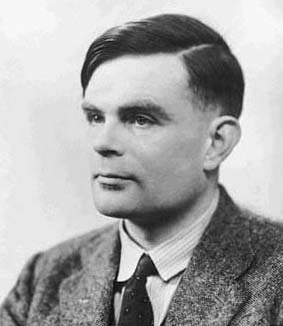
Turing.jpgLast year. after the unequivocal apology to wartime code breaker Alan Turing by the British government, prosecuted for his homosexuality in 1952, the Trust urged the nation to support its preservation as a permanent tribute to the legacy of Turing and the thousands who worked there, providing vital intelligence gathering during the Second World War (see news story).


Later this month, Christie's is to auction off an impressive quantity of Turing's offprints, as part of a larger auction of manuscripts, including 15 of his 18 published papers. It is thought to be the largest collection in the world, put together by Turing's friend and fellow Bletchley Park codebreaker, Professor Max Newman, to whom Turing presented the offprints.

The collection includes Turing's first published paper  'Equivalence of left and right almost periodicity' an offprint from: Journal of the London Mathematical Society in 1935 and  'Computing machinery and intelligence', a pioneering piece on artificial intelligence, an offprint from: MIND: A quarterly review of Psychology and Philosophy, published in 1950, along with the only published evidence of Turing's war work on computers.

Gareth Halfacree, an independent supporter of the Bletchley Park Trust, has launched a campaign to raise the money needed to purchase the collection for permanent public display at Bletchley Park.

"They belong in a dedicated museum," he says, "but Bletchley Park can't afford the £300,000 to £500,000 guide price.

"As a result, I'm asking for volunteers to dig deep and see to it that these papers not only stay in this country but stay where the public can see them and benefit from them. Let's save them from being locked away in the vaults of a private collector."

William Newman, the son of Max Newman, highlighted the importance of the collection, saying, "The offprint collection's value derives mainly from its completeness; indeed it may be the most complete collection of Turing's works in the world. This has come about because Turing started to give offprints to Max Newman before he had published the Computable Numbers paper. He subsequently gained a large following, who were interested mainly
in his follow-on work. In fact Turing published only 18 papers."

However, time is short to save these highly valuable papers for the nation. The auction takes place on the 23 November.

To view the collection visit the Christies web site or to donate please visit, www.justgiving.com/turing-papers/


• For visitor information, contact 01908 640404, info@bletchleypark.org.uk,or go to www.bletchleypark.org.uk

Dan Dare inspired a lifetime of science for Professor Pillinger

Dan Dare fans inspired by his adventures might well be interested in Professor Colin Pillinger's new book, My Life on Mars.

Colin gained his PhD from the University of Swansea, Wales, in the late 1960s , and became one of the lucky few Britons to work on the lunar samples brought back by the Apollo 11 Moon landing mission. Later, at Cambridge and the Open University, he developed techniques for classifying meteorites according to their chemical composition, and has worked on a NASA mission to collect a sample of the 'solar wind', and ESA missions to investigate how meteorites erode in space.

He's perhaps best known for his work on the European Mars Express project and the the Mars Lander, Beagle 2 and his experiences surrounding its development are a major part of the new book.

Journey in to Space -
like Dan Dare, an
inspiration
Born in 1943 and growing up in the 1950s, it should come as no surprize to learn that Professor Pillinger was inspired by reading Dan Dare in the Eagle and the BBC's  Journey into Space radio adventure serial as a child. 

"Like many kids, I used to read Dan Dare comics and listen to Journey into Space on the radio," he revealed in an interview for the European Space Agency web site. "And I would draw rockets, which, of course, bore no resemblance to how they are now. It was a big surprise when I first saw that spacecraft didn’t have a point at the top and fins at the bottom!

"But I was not an anorak," he insisted in another interview for the Daily Telegraph. "When I went to class, it was to sit in the back row. School was a place to meet other kids and play football. I didn't want to be the next Einstein."

"My Life on Mars is a dual autobiography," Professor Pillinger says of the book. "Mine interwoven with the untold story (including the bits some people didn't want anybody to know) of Beagle 2. For seven years the British mission to look for life on the Red Planet captivated the public all over the World."

Stories about about the mission appeared in the media all over the World, particularly in the United States as the following extract from the book’s dust jacket reveals:
On 12 March 2010 Astronauts Neil Armstrong, the first man to set foot on the Moon, Gene Cernan, the last man to do so and Jim Lovell, who piloted the stricken Apollo 13 home, broke a journey back to the United States to attend an event at the Royal Society designed to encourage an audience of young people to follow careers in science and technology. Among the Fellows of the Society present was Colin Pillinger.

As Colin got up to leave at the end of the afternoon, he was grabbed by a US Embassy official who said “The Astronauts would like to meet you.” Of course Colin wanted to meet them but he wasn’t prepared for the greeting he received from Neil Armstrong, perhaps the best known man on Earth, “You analysed some of my samples!” Being recognised by such a trio must make Colin, a man with a passion for telling the public about science, one of the best known scientists in Britain.

Colin owed Armstrong et al. a great deal. He had come from what can only be described as an under-privileged background, via the Apollo programme to lead the ill-fated Beagle 2 mission to Mars. In 1996 he gathered around him an unlikely team consisting of the Rock Band, Blur, the country’s most controversial artist Damien Hirst, combined them with top University scientists and engineers from the satellite Industry, designed a spacecraft on the back of a beer mat, built it in a garage and set off 250 million miles to answer one of life’s ultimate questions: “Are we alone in the Universe?” Colin’s wife, Judith, named the spacecraft Beagle 2; it had the British Nation on the edge of its seat at Christmas 2003.
This then is Colin Pillinger’s story and the full, previously undisclosed, account of the Beagle 2 mission.
Published by the British Interplanetary Society, this 369 page book features over 100 illustartions and a foreword by Sir Patrick Moore. It  costs £16.50 (plus £2.50 P&P in UK, overseas please enquire) when purchased from British Interplanetary Society’s website at www.bis-spaceflight.com and is also available from all good bookshops (ISBN 978-0-9506597-3-2).


• For signed and dedicated copies contact the author at www.barnstormpr.co.uk


More famous Dan Dare fans listed here on our main site


Inside Out - 2004 BBC interview with Professor Pillinger 


The Guardian, 16th January 2009: Britain needs a real-life Dan Dare to inspire the young

Friday, 12 November 2010

Is the iPad on Christmas Lists? No, say Consumers

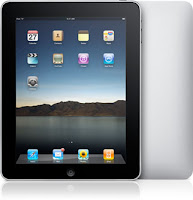
The latest research from Broadbandgenie.co.uk has shown that most UK consumers won't dream of paying £400 for an Apple iPad, despite the desirability of the UK's number one new gadget.

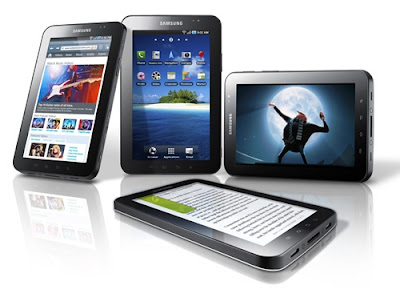
This will also be bad news for Samsung, whose Galaxy tablet is being released with similar price points in the run up to Christmas, available from Tesco, Carphone Warehouse and electrical stores, as well as all the major mobile telecoms.

The Samsung Galaxy Tablet. More info for UK buyers here
In a poll of more than 1,300 visitors to the broadband, mobile broadband and smartphone comparison site, more than 60 per cent said the iPad was 'definitely not' worth £400 or more. More than 200 more said it 'wasn't really' worth the price tag, putting the total thinking it was poor value up to 80 per cent.

The 32GB iPad, with its 24.5cm (9.7in) touchscreen, looks like an enlarged iPhone and costs £499 (and £599 for the WifFi/3G model), while the 64GB version costs £599 (£699 with Wifi/3G).

"There's a clear message here from British consumers," notes Broadband Genie editor Chris Marling. "While they like the idea of a tablet, they aren't willing to pay through the nose for one.

"With ereaders, smartphones, netbooks and even laptops now available for a fraction of that price, it's a tough ask for people to see the value in a tablet costing up to £700. And with cheaper tablet models already appearing, some running on the popular Android OS, it's easy to see why.

"Over time, the tablet is likely become a standard gadget in the majority of UK households," he feels. "Essentially right now they bring nothing new to the party, so are very much a luxury - especially in this price bracket.

"We see two likely scenarios," he offers. "Firstly, potential customers will wait to see how much mobile networks are willing to subsidise these top end tablets via 3G SIM contracts. Secondly, they will balance this against the quality of the cheaper models that are now arriving and make a decision accordingly.

"British consumers are a wily bunch, especially when it comes to mobile broadband devices," feels Marling. "On the whole, they simply won't pay ludicrous prices for this kind of technology, even if it does come branded with the Apple logo."

• IPad on Apple UK: www.apple.com/uk/ipad

Samsung Galaxy Tab: UK Information from Samsung

Followers

  © Blogger templates The Professional Template by Ourblogtemplates.com 2008

Back to TOP